
THE PROMONTORY

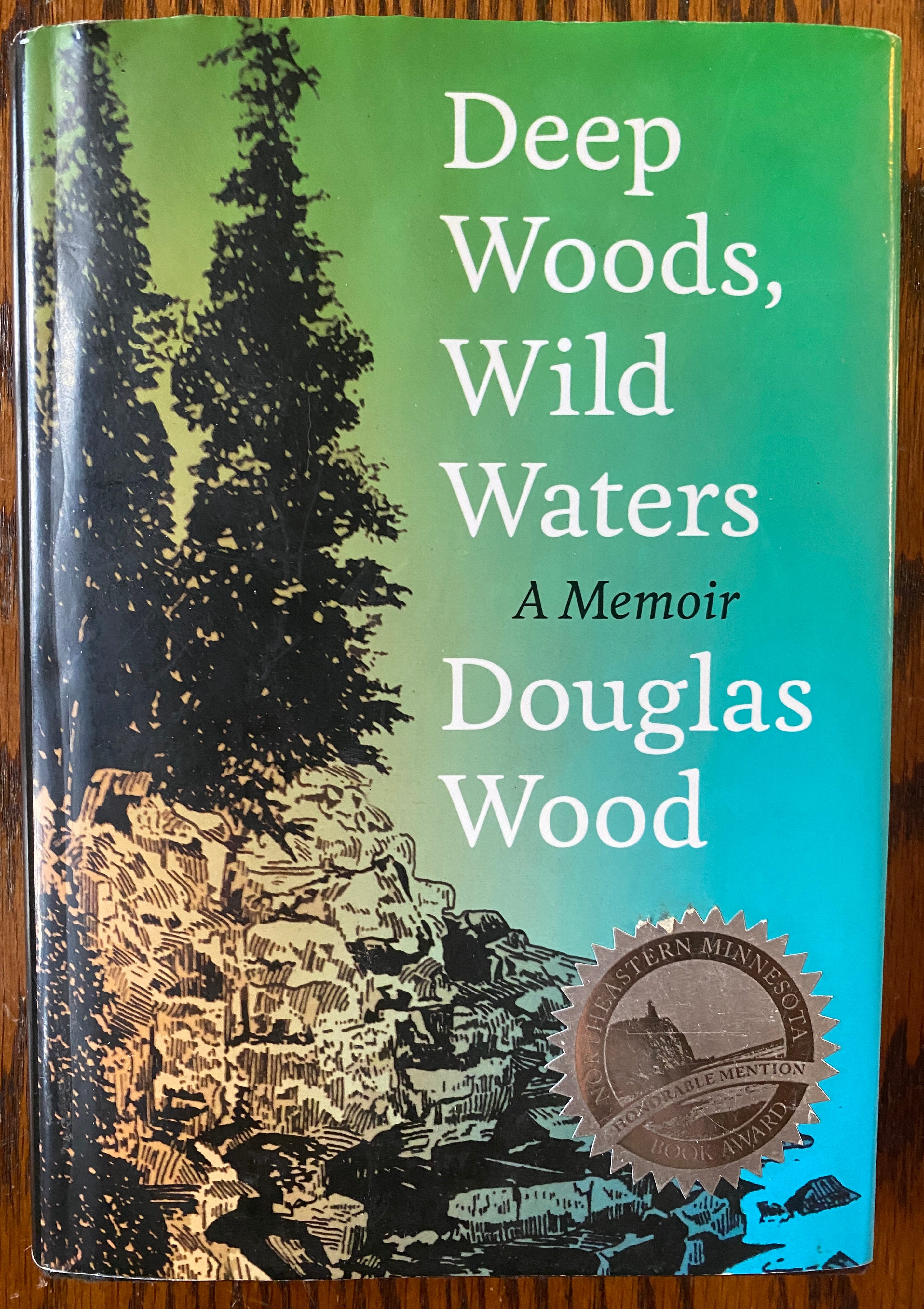
SOMETIMES you just feel like sharing. Especially around a campfire. (Even a virtual one.) Feelings, impressions, a good story. Especially on a long and arduous journey. Especially when you find a really good place to stop, and rest, and share what needs sharing. So... I’m feeling that now. Perhaps you are, too. And I know just the place. In the far North, on the grand and historic Churchill River, on a 500 mile canoe journey. A high, rocky headland, with a view of forever and a spectacular sunset. With a crackling campfire, and a simmering pot of coffee. Maybe you’d like to join our little band for a while. If so, go ahead and grab a cup of (fairly) good coffee. Find a comfortable log or rock. Say ‘hi’ to the gang. And enjoy the view. From my book, ‘Deep Woods, Wild Waters’ join us here on... ‘The Promontory.’
We had traveled for days down the wild, winding river, filled with bends and twists, unpredictable ledges, falls, and seemingly endless rapids. Our minds were filled with the daily, moment to moment decisions and dangers, the here-and-now problems to be solved, challenges to be met. How should this staircase be attacked? How could that souse hole be avoided? Did the ledge represent a safe drop, or was there a “keeper” below, the water too disturbed, too aerated to support the canoes? Was there enough of a “V” between those two boulders, or would the current sweep us into the first one before we could manage the second? Could we handle the haystacks at the bottom, or should we pull an eddy turn and sneak down the far shore?
Every day, every hour was filled with such problems and choices, broken up by short stretches of flat water between the rapids. There was an almost infinite variety of circumstances to negotiate. But always we were within the context, the boundaries of the river, the ever-flowing water, the ever-passing shorelines with their beckoning eddies or looming walls and sweepers, and all the boulders, pillows, and other obstacles within the main current. What would the river do next? What scenario would we find around the next bend, and how would we respond? It was a good time, the contours of our days clearly defined. There was a constant flow of difficulties, yes, but manageable, met, and overcome.
In such a stretch all of life becomes a part of the flow, decisions hurtling forward one upon the other, with little time for pondering or reflection. Always there is the river, the constant current of events, the wherewithal to react, the imperative to continue forward. I have often thought of such times as “the shrinking of the world,” where the defining shorelines of life are near, the world beyond them an indefinite blur, beyond one’s concern or control. There is only the flow, the current, the next challenge to be met and overcome, and the few close companions with whom the journey is shared. There is only the river and those who are a part of it.
And so we ran the wild river, the roar of it constantly in our ears, the look and feel and smell of it becoming a part of us, filling our waking hours and even our dreams at night.
Then, suddenly, it was behind us. One last push, one last kick from the current and we were swept into a vast expanse of open lake.
The first impression was almost one of shock, although we knew the change was coming. In only a moment the confining riverbanks, the almost comforting limits to our vision and perspective for so many days, were gone. The narrow boundaries that had, along with the gradient of the landscape, produced the speed and current to which we had become so accustomed, were no more. Now the world opened up into a wide, blue expanse. The horizons were distant, the land and water melting one into the other, and into the infinite sky itself.
This was what we had been pointing toward for days. We were nearing the end of our long trip. One more big lake after this one, perhaps two more campsites, and all would change irrevocably. The flow of the river and all its challenges would quickly be replaced by the flow of other events, the wooded riverbanks supplanted by other sorts of boundaries and restrictions as travelers moved back into the familiar rivers of their own lives. But now, with the rapids behind us and the wide horizon before us, there was almost a feeling of loss, of disorientation.
Gradually, as our eyes became accustomed to the bright bowl of the sky and the reflecting lake, the distance of the shores, we became aware of a great point of land. A rocky eminence reached out from the west and into the blue before us. It was something to focus on, a point of definition, a landmark to steady us, to help us get our bearings and pull us forward. We began to paddle towards it.
Long ago I had learned it is best, whenever possible, to avoid paddling straight across broad expanses of open water in the far North. In such situations the wind gets the full fetch of a big lake and danger, in the form of hissing combers, can arrive quickly. There is also the simple fact that it is more interesting to paddle along a shoreline than across wide water. Each undulation in the topography, each leaning pine or looming boulder, each small cleft in the rocks, gives a sense of reality and perspective, as well as the feel of measurable progress, to the whole enterprise. The winter wren warbling its liquid song from deep in the woods, the mother merganser leading her brood along the shore, the mink moving like a sleek shadow over the rocks, the kingfisher rattling from a dead limb, none can be appreciated or even noticed from the middle of a big lake.
But on this afternoon the sky was clear, the weather stable, and sudden winds seemed unlikely. And the point, the great promontory, reached so far out into the lake that we would have had to go well out of our way to follow the curving shoreline. So across the wide expanse of blue we headed.
Now, with the river and its propulsive current behind us, we had to discover once more the rhythm, the feel of self-propulsion, the slow, steady, stroke-by-stroke effort of progress toward a distant goal. For a long time, it seemed we made no progress at all. After the swiftness of travel on the river, the clear, cold, lake water seemed more like molasses, the canoes barely moving. Illusion, of course. On such reflective waters canoes fairly fly, the only hindrance being the fatigue or lethargy of the paddlers.
Gradually, almost imperceptibly at first, the point drew nearer. Eventually we began to make out the most prominent features, including the most obvious: the point was a sheer cliff. We were northwest of the shield, that great dome of mostly igneous bedrock that stretches from east of Lake Huron and Georgian Bay to northern Minnesota, from Hudson Bay far to the west, and that gives most of the Canoe Country its distinctive character. Here the bedrock was limestone, a rock that fractures and breaks at right angles and into long, flat surfaces. This was no rounded whaleback of basalt or granite, but a sharp-edged knife plunged into the heart of the lake. As the sun slowly angled down to the northwest the point and its shields of lichens began to flame orange-red in the lowering rays. Great fractures and cleavages gradually became visible, with enormous blocks of stone scattered below the vertical cliff face.
Summer sunsets last long in the North, and as the canoes moved ever closer, the flaming rocks grew ever brighter. It was a scene worthy of days of hard paddling. Strokes became deeper and stronger and the canoes fairly leapt forward. But beautiful as it was, we could only wonder, would there be anywhere to camp in such a place? The cliff face did not look promising.
On and on the canoes surged ahead, seemingly pulled by the gravity of the promontory, until finally we reached the sharp tip of the knife and swept past it, more long miles of open lake to the south and east. Then, a pivot to the right and we were paddling down the south side of the point. What a different experience we’d have known had the winds been howling as we made that long crossing! But fate had been kind and now, as we crept along the shore in the dusk, looking for a landing, perhaps it would be kind again.
On the back side of the headland, opposite the lowering sun, the ambient light was growing dim and we would have to look closely to find what we were looking for—a break in the jigsaw puzzle of limestone blocks, an access to the high, flat ground above. Here the shoreline was still rough, but not nearly as steep or inaccessible as along the cliff face on the north. Maybe… just maybe we would discover an access. Suddenly, almost hidden among the boulders, leatherleaf and sweet gale, we spied it, just enough of an opening. We nosed in carefully, climbed out and picked our way over the rocks, helping each other with packs and gear and canoes. Whatever accommodations we found above would have to do. It was late. We were tired. This would be home for the night.
Finding a campsite each night on a long expedition is one of the great joys, and often one of the main challenges, of a canoe trip. One never knows for sure, deep in the bush, in new country, what an evening camp will hold. A good kitchen, a safe, sheltered spot for the fire, plenty of dry wood, level sites for the tents? All are important, and without any one of them the night can be long. Then beyond the essentials there are other considerations—a good view, a chance to watch the sunset or the moonrise, a breeze to keep the bugs at bay, perhaps a nearby blueberry patch, something about the whole setup that says, “This is it. We’ve arrived. We’re home.” No campsite has everything, but sometimes the mixture of ingredients is put together in such a way that it feels right from the moment of arrival, and there is the sense that it will be remembered long after the trip is done, perhaps for years to come.
As we reached the high ground, the impression was immediate. David Thompson, Alexander Mackenzie, or Lewis and Clark would have been grateful for such a camp, would have traveled miles to reach it. The limestone bedrock ensured that the ground was level as a tabletop. A mixed woods of conifers and birches, large and small, provided shelter and plenty of firewood, with openings for tents and room for a kitchen. Small chunks of limestone would make a fine fireplace. And best of all, we would have the overlook from high above the cliff to enjoy the long, lingering sunset, providing light for hours to come.
So far as we could tell, no one had ever camped here before, and we set about making the place our own. Tasks that had become second nature during the previous weeks were begun, each person setting about his or her nightly routine. But something was different. For some reason, although we were tired and hungry, the normally quick and efficient set-up was slow to materialize. I puzzled over it, grew irritated, then caught myself being held in the same amber.
It was the view, of course. Now that we had left the river and its endless stair-step rapids behind us, now that we had completed the long traverse of open lake and reached the promontory that had pulled us forward, now that we had “arrived”… there was the view. To the south and east lay long reaches of open lake, the water no longer blue in the brightness of mid-day, but becoming tinged with the shades of wine. The far shores beyond the wine-dark waters were etched against the deepening sky, and represented the last leg of our trip to come, all that was still unknown. Tomorrow those great expanses might be calm and welcoming again, as they had been today. Or they might be something different entirely.
And from atop the high cliff itself, gazing into the sunset and back toward the way we had come, it seemed we could see more than the big traverse and the hints of evening mists at the river’s outlet. From the mental and emotional perspective of the promontory the whole trip lay before us, the interlaced rivers, lakes, and portages we had known, the weeks of travel, the comfortable routines shared, the star-filled nights and gauzy mornings, deep waters and deepening friendships, adventures of the body, mind, and spirit. It was all there in the last golden light. Work could wait. Dinner could wait. They would have to. There was a view to appreciate.
In any life, any journey, such times and places of overview and perspective are infrequent and rich with meaning. A point of high ground, a promontory from which the lay of the land can be seen and fully absorbed, and one’s place in it understood, is a rare treasure. From that headland everything looks different. After it everything IS different.
And so we lingered. Each person’s perspective was his or her own, but we shared the moment. We shared the promontory.
Eventually, tents were pitched, a fire started, supper made. But when the evening dishes were done and sunset long gone, no one seemed in a hurry to crawl into the sleeping bags. A pot of sweet gale tea, from leaves picked along the shore, was brewed. Canoes, packs and paddles were checked and rechecked, everything tucked safely away. One after another, extra logs were laid upon the fire, each meant to be the last. It had been a good day. Tomorrow would be as well. From atop our aerie all of the days, those behind us and those before us, now seemed gilded in the gold the sunset had ladled out, their inherent value clear and unmistakable.
Eventually all was still. The wooded point grew dark, surrounded by the soft glow of the lake and overlaid by a blanket of stars. From the promontory, it seemed, we had a vantage point on the entire cosmos. From the promontory, for a few hours, we could see forever.
(From my book, ‘Deep Woods, Wild Waters,’ the University of Minnesota Press.
)
Oh, my heart! Such passion, such emotion, such lyrical beauty. Thank you for this, for just a few minutes I was far away from my troubles.
Love that book.